In short
Guttering is the cheapest part of a roof and the part that causes the most expensive damage when it is ignored. Water coming over the back of a gutter runs straight down the wall, and after a couple of winters that is a damp problem inside rather than a gutter problem outside.
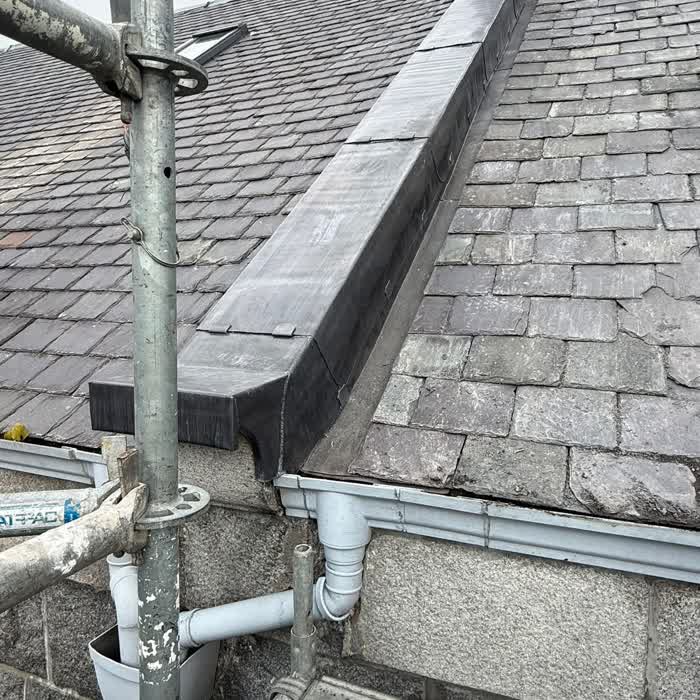
Signs you need guttering
- Water pouring over the edge in heavy rain, always at the same spot
- A vertical damp stripe on the outside wall under a joint
- Plants growing out of the gutter
- Sagging runs, or gutter that has come away from the fascia
- Staining or green algae down the brickwork below a downpipe
- Cast iron gutter rusting through at the joints
What the job involves
Find out why it is overflowing
Blocked, sagging, wrongly laid, or simply too small for the roof area. Those need different answers and only one of them is cleaning.
Check the fall along the run
Gutter needs a consistent fall to the outlet. A lot of overflowing gutter is not blocked, it is level or falling the wrong way.
Repair or replace honestly
A sound run with one failed joint does not need replacing. A brittle sun-damaged run does.
Match the property
UPVC where it suits, aluminium where a longer life is worth it, and cast iron kept and repaired on period property where plastic would look wrong.
Clear the downpipes and gullies
A clear gutter feeding a blocked gully just moves the problem to the bottom of the wall.
Want someone to take a look?
Send a photograph of the problem and you will get a straight answer on what it needs, at no cost.
Guttering near you
Frequently asked questions
How often should gutters be cleared?
Once a year on most houses, twice under heavy tree cover. A lot of the streets we work in are lined with mature trees and those gutters fill every autumn without fail.
Can you repair cast iron rather than replace it?
Usually yes, and on a period property it is normally the right answer. Cast iron can be rebedded, resealed and repainted and will then last many more years.
Do you replace fascias at the same time?
It is normally the sensible time, since the gutter has to come off to get at the fascia. See our soffits and fascias page.
My gutter only overflows in heavy rain. Is that normal?
No. It usually means the run is undersized, laid to the wrong fall, or partly blocked. It is worth sorting because that water is going somewhere.
Do you need scaffolding for guttering?
Short works can be done safely from ladders or a tower. Longer runs at height want a scaffold, and it will be in the quote.