In short
Repointing is raking out the failed mortar between bricks or stones and replacing it with fresh mortar mixed to suit the building. Getting the mix right matters more than most people realise: a hard cement mortar on a soft old brick or stone will push the damage into the masonry itself rather than the joint.
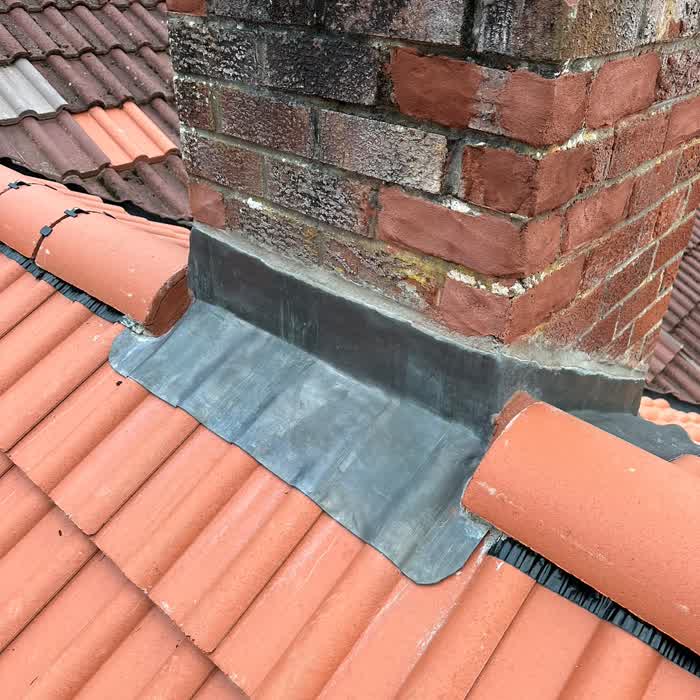
Signs you need repointing and restoration
- Mortar that crumbles away when you rub it with a finger or a key
- Open joints you can see daylight or gaps in from the ground
- Damp patches on an inside wall that line up with an exposed elevation
- Ridge or verge mortar cracked, hollow sounding or missing in places
- Plant growth taking root in the joints
- Previous repointing that has cracked away from the brick as a strip
What the job involves
Work out why it failed
Mortar does not usually fail on its own. If a joint has washed out on one elevation there is often a gutter, a flashing or a cracked ridge sending water at it.
Rake out to a proper depth
Shallow pointing skimmed over the top of failed mortar lasts a winter. The joint is cut back far enough for the new mortar to hold.
Match the mortar to the building
Modern buildings take a cement based mix. Older brick and stone usually want lime, which is softer than the masonry and lets the wall breathe. We will tell you which yours needs.
Point and finish the joint
The joint is filled and then finished to match what is already there, so a repointed section does not stand out as a patch.
Protect while it cures
Fresh mortar needs the right conditions to go off. In hot or freezing weather it gets covered rather than left to fail.
Want someone to take a look?
Send a photograph of the problem and you will get a straight answer on what it needs, at no cost.
Repointing and Restoration near you
Frequently asked questions
How do I know if my house needs lime rather than cement?
As a rough guide, older solid wall properties in soft brick or natural stone want lime, and anything with a cavity and modern brick is normally fine with a cement based mix. It is not always obvious from the ground, so we look before we mix anything. See our lime work page for more.
Can you repoint just one wall?
Yes, and often that is all that is needed. The elevation that takes the weather usually goes first.
How long does repointing last?
Correctly raked out, correctly mixed and correctly finished, it is measured in decades rather than years. Badly done, it can fail inside a couple of winters, which is why so much of it gets done twice.
Do you repoint chimney stacks?
Yes, and it is one of the most common things we get called to. A stack is exposed on all four sides and it is usually the first mortar on the building to go.
Will it stop my damp problem?
If the damp is coming through open joints then it will help a great deal. Damp has other causes too, so we would rather look at it than promise something we cannot see yet.