In short
Natural slate is the covering we most enjoy working with and the one that most rewards doing properly. A well laid slate roof outlasts the people who laid it. What usually fails first is not the slate but the nails holding it, which is why slates start slipping decades before the roof is actually worn out.
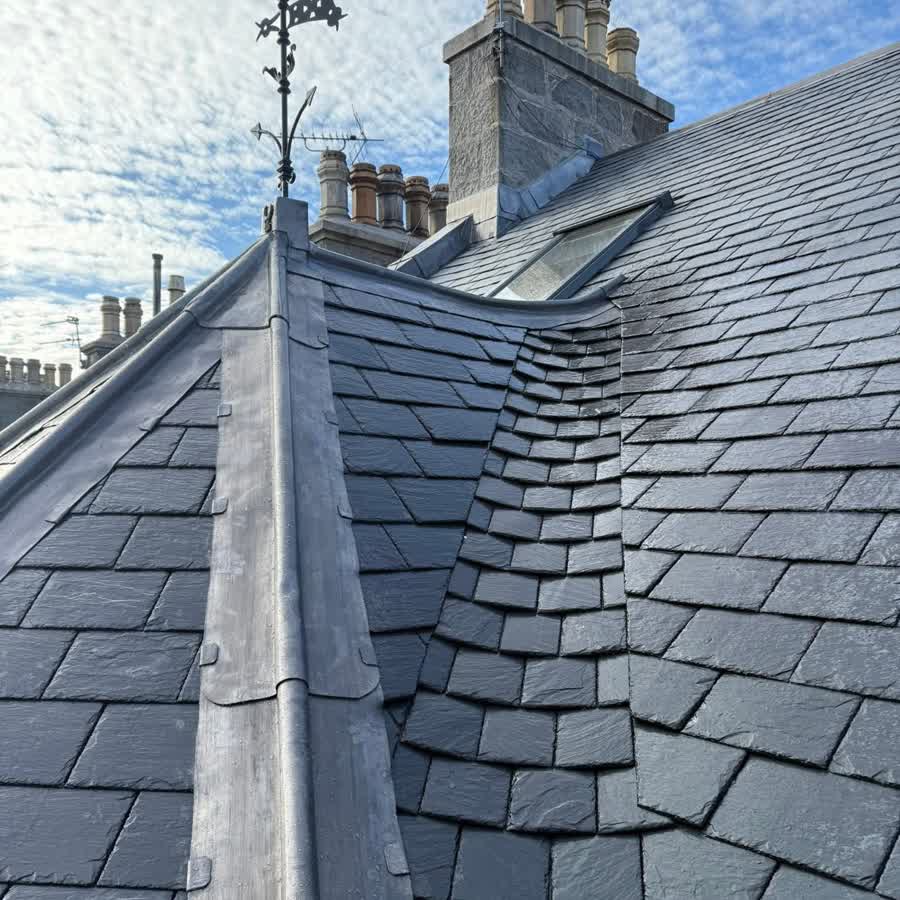
Signs you need slate roofing
- Slates slipping one after another over a season, often low on a slope first
- Slates face-fixed with clips or hooks by a previous repair
- Slate faces flaking away in layers
- A slate roof patched with tiles or with mismatched slate
- Lead ridges, hips or valleys split along the fold
- Mortar torching crumbling away inside the loft
What the job involves
Establish whether it is nail sickness
If the slate is sound and the nails have gone, no amount of patching stops it. That is the most important thing to know before spending money.
Save what is worth saving
Good slate is worth reclaiming and relaying. On many roofs we can reuse a large proportion of the original.
Match what has to be replaced
Size, thickness and colour all need to be close, or the repair reads as a patch from the street.
Lead the junctions on the roof
Ridges, hips and valleys dressed by hand to fit, rather than folded to a pattern in a workshop and forced into place.
Get the head lap right
The lap is what keeps a slate roof watertight, not sealant. Get it wrong and the roof leaks in driven rain regardless.
Want someone to take a look?
Send a photograph of the problem and you will get a straight answer on what it needs, at no cost.
Slate Roofing near you
Frequently asked questions
Is reclaimed slate as good as new?
Often better. Older Welsh slate was frequently a higher grade than a lot of what is imported now. It has to be sorted properly and anything delaminating discarded.
Can you repair rather than replace?
Yes, where the fixings are sound. If slates are slipping across the whole roof it is nail sickness and repairs become an annual bill.
Why not use slate-effect tiles?
On the right building they are a reasonable, cheaper option. On a period property they look wrong and can devalue it, particularly in a conservation area.
What is torching?
Lime mortar applied under the slates from inside the loft on older roofs, to seal the gaps before felt existed. Crumbling torching is normal on an old roof and is not by itself a reason to re-roof.
How long does a slate roof last?
The slate can last well over a century. The nails and the leadwork are the parts on a shorter clock.