In short
Stonework is the half of our name that most roofers do not offer. It covers chimney stacks, copes and skews, string courses, and elevations where the stone itself has spalled, cracked or been lost. The aim is always that the repair reads as part of the building rather than as a patch on it.
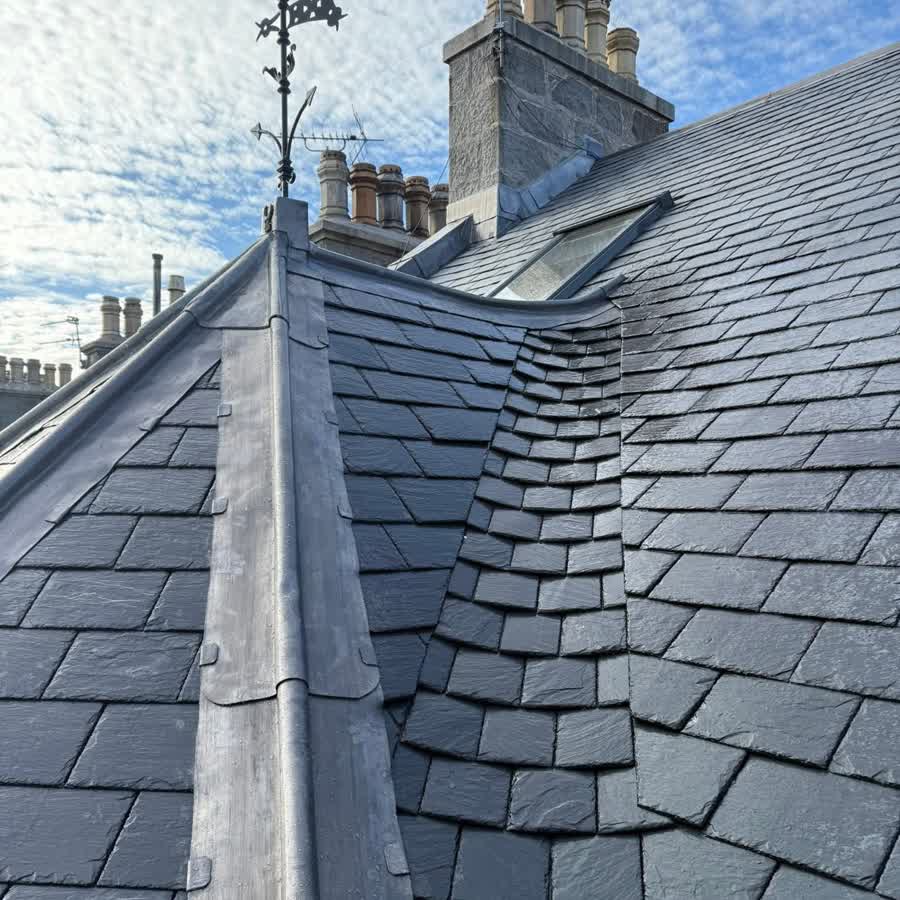
Signs you need structural masonry repair
- Faces of stone flaking or blowing off, especially near ground level or on a chimney
- A cope or skew that has slipped, cracked or gone missing
- Open joints in a stone elevation where the mortar has washed out
- A chimney stack that is leaning or has lost its shape
- Previous repairs in hard cement that are now damaging the stone around them
- Cracks running through stone rather than along the joints
What the job involves
Survey and understand the building
Stone behaves differently to brick and different stones behave differently to each other. We look at what the building is made of before we decide how to fix it.
Agree what is repaired and what is replaced
Sound stone is kept wherever it can be. Replacing more than necessary costs you money and takes character off the building.
Source stone that matches
Colour, texture and bed height all need to be close or the repair announces itself from the pavement.
Cut, set and point
New stone is cut to fit the opening rather than the opening being enlarged to fit the stone, and it is bedded and pointed in a mortar that suits the original.
Leave it looking like it belongs
The measure of a good stone repair is that a year later you have to be told where it is.
Want someone to take a look?
Send a photograph of the problem and you will get a straight answer on what it needs, at no cost.
Structural Masonry Repair near you
Frequently asked questions
Do you rebuild chimney stacks?
Yes. Taking a stack down to a sound course and rebuilding it, then reflashing where it meets the roof, is one of the jobs we do most often.
Can you match old stone?
In most cases yes. Matching is about colour, texture and how the stone is cut as well as the type, and we would rather show you a sample before it goes in than surprise you.
Is stonework more expensive than brickwork?
It usually takes longer because more of it is cut and fitted by hand, and the material costs more. We will always tell you the number before you commit to anything.
Do you work on older and period buildings?
Yes, and a lot of our stone and lime work is on older property. If a building is listed or in a conservation area, consent is the owner's responsibility and we will tell you plainly if we think you need it before we start.
Why does hard cement damage old stone?
Cement is harder and less porous than most older stone. Water that would have evaporated through the joint goes through the stone instead, and in a frost the face of the stone comes away rather than the mortar. That is why so much cement repointing from the seventies is now causing the damage it was meant to prevent.